
The short answer
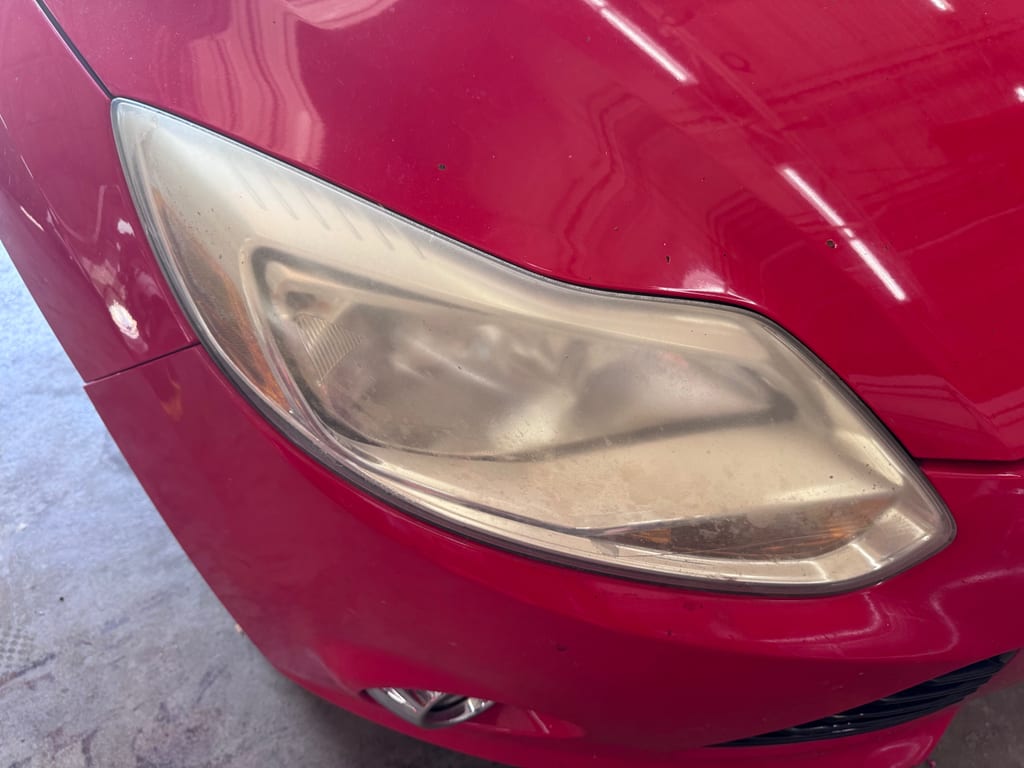
First decide which surface is cloudy. Exterior haze is on the exposed face of the lens and commonly looks yellowed, chalky, dull, rough, or uneven. An internal condition appears behind that face as mist, droplets, streaks, pooled water, staining, or damage to a reflector, projector, or another part of the assembly.
That distinction changes the next step. Eligible exterior deterioration may be a restoration candidate. Moisture, staining, damage, or a lighting problem inside the assembly needs diagnosis, repair, or replacement rather than exterior polishing.
Start with the location
Inspect the lamps when they are switched off and cool. Gently wash and dry only the outside with water, vehicle-wash soap, and a soft wash material. This is a location check, not a restoration procedure.
Then view the dry lens in daylight from the front and from an angle:
- Look across the exposed surface for yellowing, a chalky film, pitting, scratches, coating edges, or a rough texture.
- Change your viewing angle. Marks that stay aligned with the outer face are more likely to be on that surface; droplets or streaks visibly set behind reflections from the outer face are more likely to be inside.
- Compare both lamps without assuming they must look the same. Part age, parking direction, earlier replacement, collision repair, and weather exposure can differ from side to side.
- Check the complete assembly for cracks, gaps, broken mounts, loose covers, deformation, pooled water, or a lamp that does not operate normally.
If the location is still uncertain, avoid using a stronger cleaner or abrasive product as a test. Changing the surface before identifying the condition can hide useful evidence or add new damage.
Signs the haze is on the outside
Exterior lens deterioration often shows one or more of these patterns:
- a broad yellow or amber cast across the exposed face;
- a chalky, milky, dull, or uneven surface that remains after gentle washing;
- fine scratches, road pitting, or a texture that catches light at a shallow angle;
- weathering concentrated on upward-facing or sun-exposed areas;
- visible coating edges, sanding marks, or uneven gloss from earlier work; or
- a clearer appearance when the wet exterior is viewed, followed by the haze returning as it dries.
Most modern outer lenses are polycarbonate protected by an exterior coating. AAA’s headlamp-lens deterioration report describes how ultraviolet exposure can contribute to yellowing and deterioration of that protective surface over time.
These clues help locate the likely problem. Cracks, severe crazing, deformation, deep pitting, chemical damage, or extensive earlier work can affect what can be corrected and whether restoration is appropriate.
Signs the condition is inside
Internal conditions appear behind the outer face or involve components within the sealed or vented assembly. Look for:
- a fine mist, beads, large droplets, streaks, or a water line on the inside of the lens;
- water collected at the bottom of the housing;
- a permanent internal stain that remains after visible moisture clears;
- cloudiness or discoloration on the reflector, projector lens, shield, or internal trim;
- residue that seems to move behind outer-surface reflections as your viewing angle changes; or
- an inoperative, dim, flickering, mis-aimed, or visibly damaged lighting component.
Cleaning the outside will not change these conditions. Exterior restoration also cannot repair a housing leak, blocked or damaged vent, loose rear cover, failed seal, internal coating problem, reflector damage, bulb fault, connector problem, ballast, module, wiring, or aim issue.
Normal condensation or a water-entry problem?
Some internal moisture can be temporary. Modern lamp assemblies commonly use vents to accommodate pressure and temperature changes. Ford’s current headlamp guidance explains that moist air can produce a fine interior mist and distinguishes that condition from streaks, large droplets, or pooled water.
Use the owner manual and service information for the specific vehicle because acceptable patterns and clearing times are not universal. In general, these observations deserve different responses:
- Temporary fine mist: may appear after a temperature or humidity change and then clear in dry conditions.
- Large droplets, streaks, or pooled water: call for inspection of the assembly rather than exterior restoration.
- Moisture that repeatedly worsens or does not clear as the vehicle maker describes: needs vehicle-specific diagnosis.
- Permanent internal haze or staining after moisture clears: points to an internal surface or component condition, not exterior oxidation.
Do not drill a hole, remove a cover, apply sealant, or heat the assembly based only on a general article. Those actions can change venting, damage components, or conflict with the vehicle maker’s service requirements.
A quick diagnostic comparison
| What you observe | More consistent with | What that means |
|---|---|---|
| Yellow, chalky, dull, or rough exposed surface | Exterior coating or lens weathering | Assess whether the exterior lens is eligible for restoration |
| Fine scratches or road pitting on the face | Exterior abrasion or impact wear | Restoration may improve some haze, but deeper defects can remain visible |
| Fine mist visibly behind the outer face that later clears | Temporary internal condensation | Check the vehicle-specific owner guidance and observe whether it clears as described |
| Large droplets, streaks, a water line, or pooled water | Water entry or another assembly problem | Have the complete lamp inspected; exterior polishing is not the fix |
| Permanent stain or haze behind the outer face | Internal coating or component condition | Diagnosis may lead to repair or assembly replacement |
| Cracks, broken mounts, deformation, or loose parts | Structural damage | Address the damaged assembly before considering cosmetic exterior work |
| Cloudy appearance plus dim, flickering, or failed lighting | Lens condition and/or an electrical or optical fault | Diagnose the operating fault separately from the lens appearance |
The same lamp can have more than one condition. An oxidized outer lens can exist at the same time as temporary condensation, a crack, prior repair, or an electrical fault.
What not to assume
- One clear side does not prove the other side leaks. Sun exposure, temperature, part history, and airflow can differ between lamps.
- A cloudy look does not prove oxidation. Deposits, chemical damage, crazing, pitting, internal moisture, and internal staining can look similar from a distance.
- Moisture does not automatically prove a failed seal. A small temporary mist may be consistent with a vented design; large droplets or pooled water are a different pattern.
- A clean exterior does not prove the problem is internal. Etching, coating failure, fine abrasion, and weathered plastic remain after ordinary washing.
- A working bulb does not prove the assembly is healthy. Mounts, housing, vents, reflectors, aim, connectors, and other components still matter.
Photographs can help document the pattern, but reflections and camera exposure can flatten depth. If the location is uncertain, an in-person inspection is more reliable than diagnosing from a single front-facing image.
Choose the next step by condition
If the evidence points to eligible exterior deterioration and the assembly is intact and working, review the complete hazy-headlight guide for the restoration-versus-repair decision. Get Clear Lights provides mobile restoration for eligible exterior lenses in Tyler and surrounding East Texas communities; the service page explains the scope and condition limits.
If the evidence points to internal moisture, staining, structural damage, or a lighting fault, use the vehicle’s owner information and have the complete assembly diagnosed. Exterior polishing will not correct an internal or operating problem.
When the evidence is mixed, describe each condition separately: what is on the outside, what is visible inside, whether moisture clears, whether the assembly is damaged, and whether the lamp operates normally. That description leads to a better decision than treating every cloudy appearance as the same problem.
Sources
- Headlamp Lens DeteriorationAAA research report · Accessed
- Headlamps — Frequently Asked Questions2026 Ford Owner's Manual · Accessed